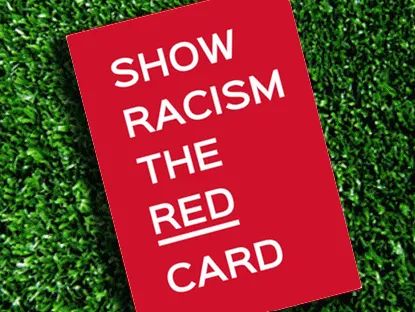
30 Years – Show Racism the Red Card
Why should a Black person have to be a famous footballer before strangers treat them with respect?
Thirty years after Show Racism the Red Card began, that question still hasn’t gone away.
The moment that started it
Newcastle, 1995. Goalkeeper Shaka Hislop pulls into a petrol station near St James’ Park. A group of young people spot him and start hurling racist abuse.
Then they realise who he is. The abuse stops and the tone flips.
Nothing had changed except one fact: he was that Hislop, the one in the black and white shirt. They hadn’t learned anything about racism. They had just found someone they admired.
That is why the story still unsettles. Celebrity worked as a shield, but it was never a fix.
From outrage to action
Hislop could have left it at a bad story for the dressing room. Instead he backed a local anti-racism initiative with a £50 donation. In January 1996, Show Racism the Red Card was born.
The idea was simple and sharp. Use football’s reach and players’ credibility to get young people to question prejudice, challenge stereotypes and understand what racism does to real people. There would be no single slogan, only education.
Today it delivers workshops, lesson materials and training for schools, clubs and workplaces across the UK, built on understanding racism rather than just banning the worst words. Football gets people in the room, and the lessons are about how people are treated in everyday life.
Thirty years, one party
The anniversary is being marked at home. The charity and Newcastle United Supporters Trust advertised an evening for Sunday 1 November 2026 at World Headquarters in Newcastle. The line-up included Hislop, former players John Beresford and Clarke Carlisle, DJs, dancing, and Afro-Caribbean street food from Diaspora Kitchen.
Even so, the format makes a point. Anti-racism work doesn’t have to live in a classroom or flash up on a stadium screen before kick-off. Music, food and shared stories don’t replace education. They build the trust that makes hard conversations possible.
Whose history is it?
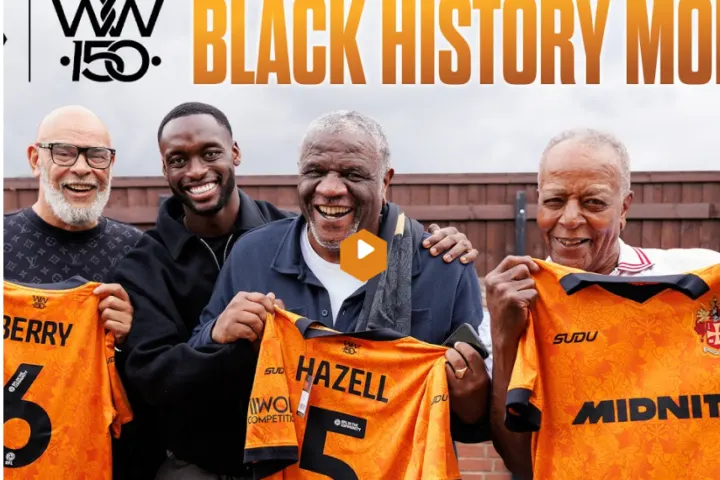
Newcastle is where the charity started and where Hislop played, and it has real Black football pioneers in its past. In April 2026 the club and supporters launched a First 11 heritage project honouring early Black players, with a Wore Flags display and a pop-up exhibition. Names included Howard Gayle, Andrew Cole, Les Ferdinand, John Barnes and Hislop himself.
That’s a good start, with one warning. Don’t flatten these men into a row of heroic portraits. They were footballers with skill and agency, and their stories sit within migration, community and a changing game. Recognition is where better history begins, not where it ends.
This is where Black Baller’s interest in culture earns its place. Music, food and a packed room of supporters aren’t side dishes to the football. They show what the game is: a meeting place. The culture around football is part of football.
Show me the workshops
Clubs, broadcasters and sponsors love the language of diversity. Visibility matters, but it isn’t investment.
So judge partnerships by what they deliver:
- Workshops run
- Young people reached
- Educators supported
- Relationships sustained
None of that shows up in engagement metrics or branded photo ops.
The uncomfortable bit
Football looks far more diverse than it did in 1996, yet racist abuse still shows up in stadiums and online. The charity began before social media. Now hate crosses borders in seconds.
Education has to keep pace without losing the personal contact that shaped it. And players can’t be left to carry it alone. Clubs, schools, governing bodies, platforms and supporters all have a part.
The lesson of a £50 cheque
Hislop’s contribution lasted because it went beyond one burst of anger. His modest donation helped fund something that kept working long after the headlines moved on.
The takeaway for football’s next generation of leaders isn’t that every player needs a charity. It’s that influence counts when it’s tied to something durable, accountable and useful to people who may never meet the player whose name brought them in.
The question that’s left
Would those young people have behaved differently if they hadn’t recognised him?
Football can’t rewrite that night. It can build a future where recognition is irrelevant to whether someone is treated with dignity.
That’s the work behind the red card, and it’s why this story belongs to Black football heritage, not just the history of a campaign.